Restoration of Cas Debrot Begins
On Monday, August 31, the second phase of the restoration project of Cas Debrot, located at Caya Betico Croes 98, officially commenced.
The project will be carried out under the guidance of Hoevertsz ArchiDesign N.V.
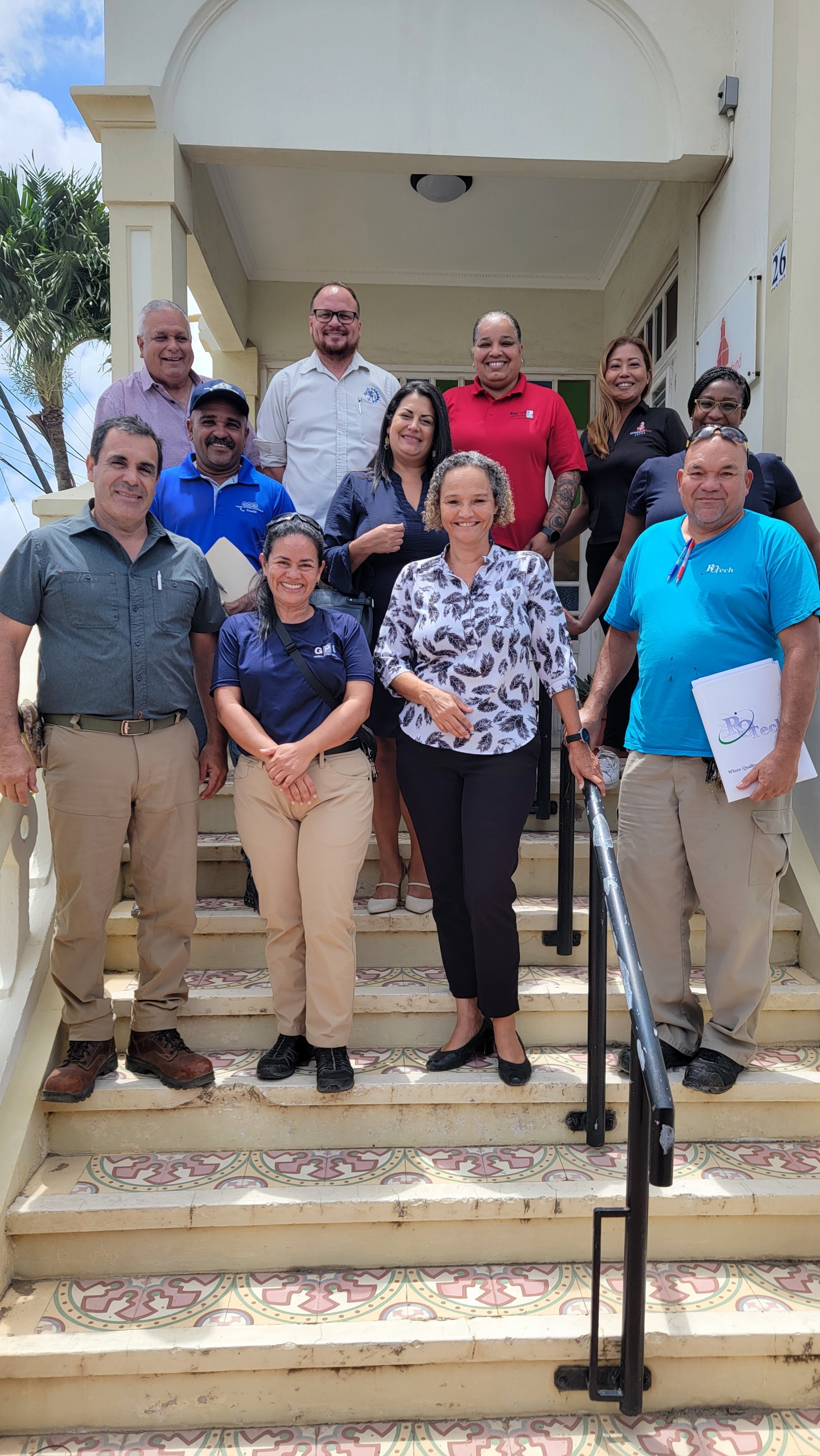
The contractor, General Property Services, will be responsible for executing the restoration works together with the construction team consisting of Protec, Hecom, Smart Systems, CCC Plumbing, Emre Carpentry, and Abeso.
The project is scheduled for completion in early 2027. Once the restoration is completed, Stichting Monumentenfonds Aruba will relocate to its new offices on the upper floor, while the ground floor will be available for lease to another organization.
In 2024, Stichting Monumentenfonds Aruba purchased the building from the Debrot family, and the Monumentenbureau designated the building as a protected monument. The restoration project is being financed by the Nationaal Restauratiefonds in the Netherlands and Aruba Bank N.V.
History of Cas Debrot
José Maria (“Boy”) Debrot, a merchant from Bonaire, decided to move to Aruba with his parents as a result of the island’s economic boom following the arrival of the oil refinery.
Upon arriving in Aruba in 1929, the family opened a general store at Nassaustraat 94, adjacent to the property where Cas Debrot would later be built. The store operated under the company name E.F. Debrot Sucs Inc., named after his father, Eduard Ferdinand Debrot. The company was involved in import and export activities in Aruba and sold a wide variety of products, including rum, gin, jukeboxes, office furniture, and air-conditioning units.
In 1929, José Maria married Elia Capriles from Puerto Cabello, Venezuela, after which the couple embarked on an extended honeymoon in Europe. It was probably during this period that construction began on their family residence, which was combined with commercial space. The building was completed after their return.
Once the house was completed, it was furnished with items purchased in Europe. The artist Pandelis painted scenes from the story of Little Red Riding Hood on the walls of the bedroom shared by Edward and his brother Oswald. Unfortunately, these paintings were later painted over when the house was rented out.
The Debrot family lived in the house until 1941, when they moved to Venezuela during the Second World War.
Throughout its history, the building underwent several changes and played an important role in the commercial life of Oranjestad. Among other uses, it housed the offices of Hollandsche Bank Unie, the Venezuelan Consulate, Debrot Hardware Store, Nassau Shoe Shop, Theresita’s Beauty Shop, and several other businesses and organizations.
In the 1950s, the ground floor became the office of Hollandsche Bank Unie N.V., while the Venezuelan Consulate occupied the second floor until the 1970s.
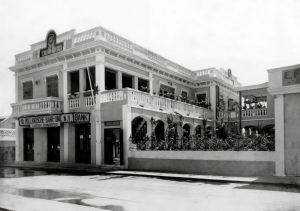
The building’s present architectural appearance reflects an impressive Latin American Neo-Baroque style. Its original design featured a front balcony with double doors, three sets of double doors on the ground floor, and another set of double doors providing access to the upper floor.
On the western side of the property, there was once a beautiful rose garden decorated with ornamental iron fencing.